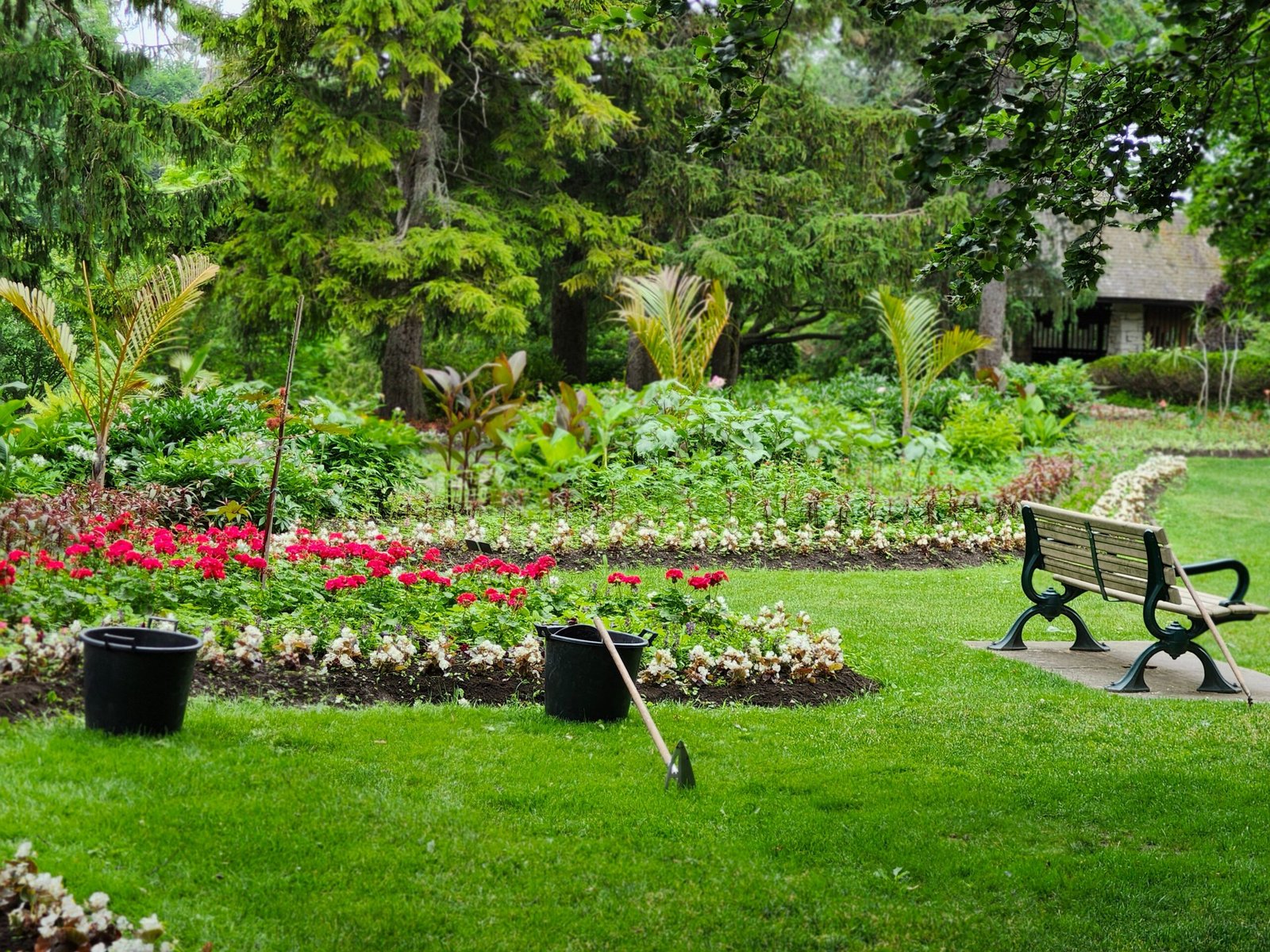
A modern garden is more than a collection of plants arranged around a lawn. It is an extension of the home—a place to relax after a long day, enjoy meals outdoors, welcome guests, spend time with family, or simply have a pleasant view from inside the house.
The most successful modern garden design ideas combine appearance with everyday practicality. Clean lines, carefully selected plants, comfortable furniture, suitable lighting, and well-planned outdoor zones can turn an ordinary backyard, patio, terrace, balcony, or courtyard into a space that feels intentional and inviting.
Modern garden design does not necessarily mean an expensive landscape filled with designer furniture and costly materials. A small garden can look contemporary with a simple layout, a few attractive planters, appropriate greenery, and good lighting. Likewise, a large backyard can be transformed by dividing it into useful areas instead of filling every corner with decoration.
The most important part is planning. Before choosing plants or purchasing furniture, think about how the space will be used, what conditions the site offers, and which features are genuinely worth adding.
In this guide, you will learn how modern garden design works, discover practical ideas for gardens of different sizes and budgets, understand how to choose plants and materials, explore outdoor lighting and sustainable landscaping, and follow a step-by-step process for planning your own contemporary outdoor space.
[Image Suggestion: Modern backyard garden design with clean paving, structured planting, outdoor seating, and subtle lighting]
What Is Modern Garden Design?
Modern garden design is an approach that emphasizes simplicity, functionality, clean visual structure, and a deliberate relationship between plants and constructed elements.
Rather than trying to make every part of the garden visually busy, modern landscapes often use a smaller number of carefully selected features. Straight or clearly defined lines, repeated materials, controlled planting schemes, open areas, and practical outdoor furniture can create a calm and organized appearance.
However, “modern” does not mean that every garden needs to look identical.
A contemporary garden can be warm and natural, highly minimalist, family-friendly, or even inspired by traditional planting while still using modern principles. The style should respond to the architecture of the home and the way the residents actually use the outdoor space.
Common characteristics include:
- Clean and clearly defined lines
- Simple, functional layouts
- Carefully organized planting
- A balanced combination of greenery and hard landscaping
- Comfortable outdoor furniture
- Practical lighting
- Repeated materials or design elements
- Limited visual clutter
- Deliberate focal points
- Outdoor areas designed for specific activities
The approach can be adapted to different climates, budgets, and property sizes. A modern balcony may consist of containers, compact furniture, and vertical greenery, while a large suburban garden might include a lawn, dining terrace, pergola, planting borders, and multiple seating areas.
The important principle is not copying a particular photograph. It is understanding why the elements work together.
18 Modern Garden Design Ideas for Beautiful Outdoor Spaces
1. Start With a Minimalist Garden Layout
A minimalist layout can immediately give a garden a contemporary character.
Instead of creating numerous small planting beds and decorative areas, organize the garden around a few strong shapes. A simple lawn, rectangular patio, defined planting border, and clear pathway may be enough to create a polished result.
This works because the eye can easily understand the arrangement. Open areas provide visual breathing room while planting and structures create definition.
Minimalist layouts are particularly useful for small and medium-sized gardens, although the principle can also be applied to large properties.
Use materials that complement one another rather than introducing many unrelated finishes. For example, one paving material combined with timber and greenery can create more visual cohesion than several competing surfaces.
The main maintenance advantage is that fewer complicated boundaries and decorative features can make routine care easier.
[Image Suggestion: Minimalist modern garden layout with geometric planting beds and a simple lawn]
2. Create Clean Lawn Borders
A lawn can look much more contemporary when its boundaries are clearly defined.
Instead of allowing grass to merge irregularly into planting beds, create a clean transition using suitable edging, paving, stone, or another appropriate boundary treatment.
The exact material should depend on the design, climate, drainage, and local availability.
Clean lawn edges can make an existing garden appear more organized without requiring a complete redesign.
This is also a useful project for homeowners renovating an older garden. Sometimes improving the boundaries between existing features can have a greater visual impact than replacing everything.
Avoid creating unnecessarily complicated curves. Simple shapes are generally easier to mow and maintain.
3. Design an Outdoor Seating Area
A modern garden should be designed for living, not simply looking at.
An outdoor seating area can become the central destination of the garden. Depending on the available space, this could be a compact bench, a pair of chairs, a lounge arrangement, or a larger outdoor sofa.
Position seating according to how the garden is used. Consider views, sunlight, shade, privacy, wind exposure, and proximity to the house.
In a small garden, built-in or compact seating can help preserve walking space. In a larger backyard, a dedicated seating zone can become one of several outdoor rooms.
Choose furniture appropriate for outdoor exposure and follow the manufacturer’s care recommendations.
[Image Suggestion: Contemporary outdoor seating area with comfortable furniture surrounded by structured greenery]
4. Add a Stone or Paved Garden Path
A pathway does more than help people move around the garden. It can also guide the eye and establish the structure of the landscape.
Modern pathways often use simple geometric arrangements. Large-format paving, natural stone, concrete-look surfaces, gravel, or carefully spaced stepping elements can create different visual effects.
The best choice depends on local climate, drainage, intended use, available budget, and how the material performs in your particular environment.
A frequently used route should provide a stable and practical walking surface. Decorative paths that are rarely used can be designed more flexibly.
Avoid installing pathways simply because they look attractive in photographs. Every path should ideally connect useful areas or contribute meaningfully to the garden’s structure.
5. Introduce Raised Garden Beds
Raised beds can provide clear planting zones while adding height and structure.
They may be particularly useful when you want to separate plants from a lawn, define an outdoor room, or introduce a stronger architectural element.
Raised beds can be constructed from various materials, including suitable stone, brick, timber, or other landscape products. The correct choice depends on local conditions, construction requirements, durability, and budget.
Their height and dimensions should also be planned carefully so that plants remain accessible for maintenance.
A common mistake is creating raised beds that are too numerous or too small. A few well-positioned beds can look more intentional than many scattered structures.
6. Use Vertical Gardening in Limited Spaces
Vertical planting is one of the most useful modern garden ideas for balconies, courtyards, narrow side gardens, and compact patios.
Walls, fences, trellises, and suitable vertical systems can provide opportunities for greenery without using as much floor space.
Vertical gardening can also soften hard architectural surfaces and contribute to privacy.
The plants should be selected according to sunlight, wind, climate, available water, support requirements, and maintenance needs. Not every climbing or trailing plant is appropriate for every structure.
Before attaching a heavy planter or vertical system to a wall, make sure the surface and fixing method can safely support it.
[Image Suggestion: Small modern garden with a vertical green wall, compact furniture, and large planters]
7. Use Decorative Planters as Architectural Features
Planters can act as more than containers for plants.
Large, simple planters can visually frame an entrance, define a seating area, mark the beginning of a pathway, or create a focal point.
In modern landscapes, planters with restrained shapes and finishes often work particularly well because they provide structure without requiring complicated decoration.
For a small space, choose fewer but more purposeful containers. Too many pots can make the garden feel crowded and increase watering and maintenance tasks.
Consider mature plant size when selecting containers. A plant that eventually becomes too large for its container may require replacement, repotting, or relocation.
8. Add a Pergola for Shade and Structure
A pergola can give an outdoor seating or dining area a stronger sense of place.
It can define an outdoor room without completely enclosing it, making it useful for patios and larger gardens where you want a transition between the house and open landscape.
A pergola can be built from materials such as timber or metal, depending on the desired appearance, local conditions, structural requirements, and budget.
Before installing one, check relevant local building requirements and make sure its construction is appropriate for the site.
A pergola does not need to be heavily decorated. Its structure alone can become an architectural focal point.
[Image Suggestion: Modern pergola over an outdoor dining and seating area]
9. Plan Garden Lighting From the Beginning
Outdoor lighting can dramatically change how a garden feels after sunset.
Rather than placing lights randomly, think about what needs illumination and what deserves visual emphasis.
Pathway lighting can help people see where they are walking. Wall or architectural lighting can emphasize structures, while accent lighting can draw attention to selected trees, planting areas, or garden features.
Seating and dining areas may need practical illumination for comfortable evening use.
Solar lights can be convenient in appropriate locations, but their performance depends on factors such as the product, weather, positioning, and available sunlight.
For permanently installed electrical lighting, use suitable outdoor-rated equipment and follow applicable local electrical requirements. Professional installation may be appropriate for mains-powered systems.
10. Introduce a Simple Water Feature
Water can add movement and sound to an outdoor environment.
A modern water feature does not have to be large. A compact wall feature, simple basin, or carefully designed contemporary feature may be enough to create a focal point.
The design should match the scale of the garden. A large feature can overwhelm a tiny courtyard, while a very small feature may disappear in a large backyard.
Water features also introduce maintenance considerations. Pumps, filters, water quality, cleaning, and seasonal care may need attention depending on the type of installation.
Think about maintenance before installation rather than treating it as an afterthought.
11. Create Privacy With Screens and Planting
Privacy can make an outdoor space significantly more comfortable, especially in closely built residential areas.
Modern privacy solutions can include fencing, slatted screens, walls, trellises, suitable hedging, or layered planting.
A screen can be used to separate an outdoor dining area from a neighbouring property or to hide less attractive service areas.
The best solution depends on local regulations, property boundaries, wind conditions, sunlight, and the amount of maintenance you want to undertake.
Plant-based privacy can be attractive but requires consideration of mature size and ongoing growth. Structural screens can offer a more predictable shape but still require suitable materials and maintenance.
12. Build a Garden Wall for Definition
A garden wall can separate spaces and introduce strong architectural character.
It might define a patio, create a boundary around a planting bed, frame a seating area, or provide a backdrop for plants.
Natural stone, brick, concrete-based products, rendered surfaces, and other materials can all create different effects.
The structural design of a wall is important, particularly for retaining soil. Retaining walls can involve drainage and structural considerations that should not be improvised.
For decorative low walls, the construction requirements may be simpler, but local conditions and building practices should still be considered.
13. Combine Different Textures
Modern design does not have to mean using only smooth surfaces.
Combining textures can prevent a minimalist garden from feeling cold or flat.
For example, smooth paving can be contrasted with textured stone, timber, gravel, foliage, or planting with distinctive forms.
The key is restraint. If every element has a completely different texture, the garden can become visually noisy.
Choose a small collection of complementary textures and repeat them across the space.
[Image Suggestion: Modern garden combining natural stone, timber, gravel, paving, and layered greenery]
14. Add a Dedicated Outdoor Dining Area
If your household regularly eats outdoors, design a dining area instead of simply placing a table wherever space is available.
A dining area works best when it is convenient to access from the kitchen or indoor dining space.
Consider table size, chair clearance, shade, lighting, weather exposure, and the amount of circulation space around the furniture.
For a compact garden, a small table can serve both dining and everyday activities. Larger gardens can accommodate a dedicated dining terrace, potentially under a pergola or other shade structure where appropriate.
15. Divide the Garden Into Functional Zones
Zoning is particularly valuable when a garden has several purposes.
One area can be used for dining, another for relaxing, another for children or recreation, and another for planting.
The zones do not need to be physically separated by walls. Changes in paving, planting, furniture orientation, level, or pathways can create a subtle division.
The important thing is to maintain a common design language. Repeating materials, colours, plant forms, or furniture styles can connect different zones.
[Image Suggestion: Large modern backyard divided into lawn, dining, relaxation, and planting zones]
16. Use Sustainable Landscaping Principles
A modern garden can also be designed with resource-conscious choices in mind.
Start with the site rather than trying to force it into an entirely different environment. Select plants appropriate to local growing conditions and consider how much water and ongoing care the landscape can realistically receive.
Reducing unnecessary lawn can be useful where extensive grass is not required for the way the household uses the space.
Mulching suitable planting areas can help manage exposed soil and may reduce the need for frequent weed management and watering, depending on the material and conditions.
Reusing suitable existing materials can also reduce waste and avoid replacing items that are still functional.
Composting appropriate garden and household organic material can be another practical option where suitable facilities and local guidance are available.
Sustainable design is not about following a particular visual style. It is about making practical choices that suit the site and avoid unnecessary consumption.
17. Use Container Gardening Strategically
Container gardening makes it possible to introduce greenery almost anywhere.
It works especially well on balconies, terraces, patios, entrances, and rented properties where permanent landscaping may not be practical.
Containers can also be moved when the layout changes.
However, container gardening can become maintenance-heavy if every corner contains individual pots. Each container can have its own watering and care requirements.
For a modern appearance, consider grouping containers by size, shape, or material. A few coordinated planters can create a stronger visual effect than a collection of unrelated pots.
Always consider the load-bearing capacity of balconies and elevated spaces before adding substantial numbers of heavy containers.
18. Make One Plant or Tree the Focal Point
A garden often benefits from one feature that immediately attracts attention.
This could be a suitable ornamental tree, architectural plant, large planter, sculpture, water feature, or distinctive seating structure.
A focal point works best when it has enough surrounding space to remain visually important.
Plant selection should be based on local growing conditions and mature size. A tree or large shrub should not be planted close to structures simply because it looks attractive when young.
The focal point should complement the overall design rather than compete with every other element.
Modern Garden Design Ideas for Small Spaces
Small outdoor spaces require discipline. The temptation is often to squeeze as many features as possible into the available area, but this can make the garden feel smaller.
Start by deciding what the space needs to do.
If it is mainly a place to sit, prioritize seating. If you want plants, use vertical surfaces and carefully selected containers. If entertaining is important, create enough clear floor space for movement around the furniture.
Use Vertical Surfaces
Walls and fences can provide valuable planting opportunities.
A vertical garden can add greenery while preserving floor area, although irrigation, plant selection, structural support, and maintenance must be considered.
Choose Multi-Purpose Furniture
A compact bench can provide seating without taking as much room as multiple chairs. Foldable furniture can also allow the area to change between different uses.
Keep Pathways Narrow but Practical
In a tiny garden, every square metre matters. Avoid creating a large pathway that consumes most of the usable space.
Instead, use a direct route that connects the entrance with the areas you actually need to reach.
Use Containers as Visual Anchors
One or two larger planters can define corners and add height without filling the whole floor area.
Avoid Visual Overcrowding
Too many colours, materials, pots, structures, and plant varieties can make a small garden feel chaotic.
A limited palette usually creates a calmer appearance.
Mirrors can sometimes be used as decorative visual devices in enclosed outdoor areas, but they should be positioned carefully to avoid unwanted glare, confusing reflections, or safety issues.
[Image Suggestion: Small modern garden layout using vertical greenery, a compact seating area, simple paving, and limited decorative elements]
Modern Garden Design Ideas for Large Spaces
A large garden presents the opposite challenge: there may be too much space rather than too little.
Instead of attempting to decorate everything, divide the property into meaningful zones.
A practical large garden might include a lawn for recreation, a dining area near the house, a quiet seating area farther away, planting borders, a walking route, and a dedicated children’s or activity area where needed.
Use repeated elements to connect these zones.
For example, the same paving material could appear at the main patio and a secondary seating area. Similar planting could appear along different borders. A consistent furniture style can also establish continuity.
Avoid creating each zone in a completely different style. A garden containing a formal patio, tropical corner, rustic cottage border, and ultra-minimalist lawn may feel disconnected unless there is a strong reason for the contrast.
Large spaces also require consideration of maintenance. A design that looks impressive on installation day may become difficult to manage if it requires excessive pruning, mowing, watering, or cleaning.
Low-Budget Modern Garden Ideas
A contemporary outdoor space does not require a complete landscape renovation.
Often, a few carefully chosen changes can create a noticeable difference.
Start by working with what you already have. An existing patio may only need cleaning, repairs, or improved furniture. Existing plants can sometimes be retained and reorganized rather than removed.
A simple pathway can establish structure without requiring an elaborate landscape installation. Containers can introduce new planting without rebuilding permanent beds. Outdoor lighting can highlight an existing tree or seating area.
You can also complete the project gradually.
For example, establish the layout first, improve the main seating area next, add planting afterward, and introduce decorative features only when they genuinely improve the space.
This staged approach also allows you to see how the garden develops before committing to additional changes.
DIY work can be suitable for straightforward projects such as arranging containers, planting appropriate plants, applying suitable mulch, cleaning outdoor areas, or refinishing certain furniture. Structural, electrical, drainage, or other specialized work should be approached according to local requirements and your level of expertise.
Choosing Plants for a Modern Garden
Plants should support the design rather than fight against it.
The first question should not be “Which plant looks modern?” It should be “Which plants are appropriate for this location and how I intend to use the space?”
Consider Your Climate
Climate strongly influences plant performance.
A plant suitable for one region may not thrive in another. Local temperature patterns, rainfall, humidity, seasonal conditions, and exposure can all matter.
Use local gardening resources or reputable nurseries to identify plants suitable for your area.
Assess Sunlight
Observe the amount of sunlight different parts of the garden receive.
Do not assume the entire garden has the same conditions. Buildings, walls, fences, trees, and neighbouring properties can create significant differences.
Understand Your Soil
Soil texture, drainage, pH, organic matter, and other conditions can affect plant performance.
If you are unsure about your soil, local testing or professional horticultural advice can help you understand what you are working with.
Consider Water Requirements
Group plants with similar watering requirements where practical.
This can make garden care easier and help avoid treating every plant as though it has identical needs.
Think About Mature Size
A plant should be selected with its eventual size in mind.
This is particularly important for trees and larger shrubs. Correct placement at the beginning can prevent future problems with pathways, windows, buildings, boundaries, and overhead infrastructure.
Use Plant Categories
Instead of relying on one universal plant list, consider combining categories such as:
- Evergreen structural plants where appropriate
- Flowering plants suited to the local climate
- Ornamental grasses suitable for local conditions
- Shrubs with appropriate mature dimensions
- Ground-cover plants suited to the site
- Trees selected for the available space
- Container plants for patios and terraces
- Climbers for suitable vertical structures
A modern garden does not need hundreds of species. Repeating a smaller selection can create stronger visual unity.
Choosing Materials for Modern Landscaping
Materials establish much of a garden’s visual character.
Natural Stone
Natural stone can provide texture and an organic appearance while working with both contemporary and more natural garden styles.
Its appearance and performance vary by stone type and local conditions, so selection should consider suitability, maintenance, slip resistance where relevant, and intended use.
Concrete
Concrete and concrete-based landscaping products can create clean, architectural surfaces.
They can work particularly well in geometric layouts, but surface finish, drainage, installation quality, weather exposure, and maintenance should be considered.
Wood
Timber can add warmth to an otherwise hard landscape.
It can be used for decking, screens, seating, pergolas, edging, or other structures where appropriate.
Different timber products have different maintenance requirements and environmental considerations. Follow the manufacturer’s guidance for outdoor use and care.
Gravel
Gravel can provide a relatively simple surface for suitable paths, seating areas, or landscape sections.
It is important to choose a suitable aggregate and prepare the area correctly. Gravel is not necessarily appropriate for every walking route, accessibility requirement, or furniture arrangement.
Brick
Brick provides texture and can work in contemporary gardens when used in simple patterns.
Its colour and pattern can connect outdoor areas with the architecture of the home.
Metal
Metal can introduce a clean architectural appearance through screens, edging, furniture, structures, or decorative elements.
The appropriate finish depends on exposure, intended use, corrosion considerations, and maintenance requirements.
Composite Materials
Composite products are available for some outdoor applications and can provide alternatives to traditional materials.
Always evaluate the specific product rather than assuming all composite materials have identical performance. Follow manufacturer installation and maintenance recommendations.
Garden Furniture and Outdoor Living
Furniture should be selected after the layout is established.
Measure the available area and allow sufficient space around tables, chairs, sofas, and other furniture for people to move comfortably.
Consider:
- Comfort
- Size
- Weather exposure
- Durability
- Maintenance
- Storage
- Relationship with the house
- Number of people who will use the area
A beautiful outdoor sofa that overwhelms a small patio is not a successful design.
For dining areas, think about how chairs will be pulled out and how people will move around the table.
For relaxation areas, prioritize comfort and shade where necessary.
For entertainment spaces, consider whether lighting, serving surfaces, and access to the house are convenient.
[Image Suggestion: Modern outdoor dining and lounge furniture arranged within a landscaped backyard]
Modern Garden Lighting
Lighting should be considered part of the garden design rather than an accessory added at the very end.
Pathway lights can improve nighttime visibility along frequently used routes. Wall lights can illuminate entrances or architectural surfaces. Accent lighting can draw attention to selected trees, planting, walls, or decorative elements.
Seating areas require enough practical illumination for people to use them comfortably.
Avoid turning the entire garden into a brightly lit space. Selective lighting can create contrast and preserve the atmosphere of the garden.
Before installation, consider glare, neighbouring properties, cable routing, weather exposure, and electrical safety.
Solar lighting can be suitable for some decorative and pathway applications, but the available sunlight and product specifications should be considered before relying on it for a particular purpose.
[Image Suggestion: Modern garden lighting at night highlighting pathways, trees, walls, and an outdoor seating area]
Sustainable Landscaping Ideas for Modern Gardens
Modern landscaping can incorporate environmentally conscious choices without sacrificing appearance.
One useful starting point is to work with the conditions already present.
Select plants suited to the local environment instead of choosing species solely because they are fashionable. This can make the planting plan more realistic and reduce the need to force unsuitable plants into inappropriate conditions.
Efficient watering is another consideration. Use watering methods appropriate to the planting design and avoid unnecessarily watering areas that do not need it.
Reducing unnecessary lawn can also make sense where large grass areas are not needed for recreation or other purposes.
Mulching suitable planting areas can help protect exposed soil and may assist with moisture management and weed suppression.
Reusing existing materials can reduce the amount of new material required. Old but suitable containers, furniture, stones, timber, or other landscape elements may sometimes be incorporated into the new design.
Composting can also provide a practical way to manage suitable organic garden material where local conditions and household arrangements make it appropriate.
Sustainable landscaping is ultimately about making sensible choices for the specific property rather than following a universal formula.
Common Modern Garden Design Mistakes
Mistake 1: Overcrowding the Garden
Why It Happens: Homeowners want to include every feature they like.
Better Approach: Decide what the garden needs most and allow open space around important elements.
Mistake 2: Starting Without a Layout
Why It Happens: Buying plants and furniture feels more exciting than measuring the space.
Better Approach: Draw a basic plan before purchasing major items.
Mistake 3: Mixing Too Many Styles
Why It Happens: Different garden photographs provide inspiration.
Better Approach: Select one dominant design direction and use complementary elements throughout the garden.
Mistake 4: Ignoring Sunlight
Why It Happens: A plant looks attractive but its growing requirements are overlooked.
Better Approach: Observe sunlight patterns and choose plants appropriate for each location.
Mistake 5: Choosing Unsuitable Plants
Why It Happens: Plants are selected based on appearance alone.
Better Approach: Consider climate, soil, drainage, water, mature size, and maintenance.
Mistake 6: Ignoring Drainage
Why It Happens: Drainage is often invisible until there is a problem.
Better Approach: Observe how water behaves during rainfall and address drainage issues appropriately before major landscaping work.
Mistake 7: Using Too Little Lighting
Why It Happens: Lighting is treated as decoration rather than part of the functional plan.
Better Approach: Identify pathways, entrances, steps, seating areas, and focal points that need appropriate illumination.
Mistake 8: Choosing Oversized Furniture
Why It Happens: Large furniture looks impressive in spacious showroom displays.
Better Approach: Measure the actual outdoor space and allow comfortable circulation around furniture.
Mistake 9: Forgetting Maintenance
Why It Happens: The design is judged by how it looks immediately after installation.
Better Approach: Think about watering, pruning, cleaning, mowing, lighting maintenance, and seasonal care before committing to the design.
Step-by-Step: How to Plan a Modern Garden
1. Measure the Space
Record the approximate dimensions of the garden and identify existing structures, boundaries, trees, paths, doors, windows, and other important features.
2. Assess Existing Conditions
Observe sunlight, shade, drainage, soil, wind, access, and existing plants.
Do not make major decisions before understanding these conditions.
3. Decide the Garden’s Purpose
Ask how the space will actually be used.
Will it primarily be a place for relaxing, dining, entertaining, gardening, children’s activities, pets, or a combination?
4. Create Functional Zones
Divide the garden into areas based on those uses.
A zone does not necessarily need a physical wall. Furniture, planting, paving, level changes, or visual boundaries can be enough.
5. Choose a Design Direction
Decide whether you prefer minimalist, contemporary-natural, architectural, warm modern, or another interpretation of modern design.
Choose a direction that complements the house.
6. Select Materials
Choose paving, edging, timber, stone, gravel, metal, or other materials based on appearance and practical suitability.
Try to maintain a controlled material palette.
7. Choose Plants
Select plants according to local climate, sunlight, soil, drainage, water availability, mature size, and maintenance.
8. Plan Furniture
Measure furniture before purchasing it and check how it will fit within the circulation routes.
9. Plan Lighting
Identify areas that need functional illumination and features that deserve subtle accent lighting.
10. Review the Entire Layout
Stand back and consider whether the garden feels balanced.
Check whether there is enough open space, whether pathways are useful, whether furniture is correctly positioned, and whether plants have room to mature.
11. Begin Implementation
Complete major structural and hard-landscaping work before adding the final planting and decorative details where appropriate.
For complex construction, electrical work, major drainage changes, or other specialized projects, use appropriately qualified professionals and follow local requirements.
12. Maintain the Finished Garden
A well-designed garden still needs regular care.
Establish a realistic maintenance routine based on the plants, lawn, materials, furniture, irrigation, lighting, and climate.
How to Maintain a Modern Garden
Modern gardens can look untidy quickly when their clean lines are not maintained.
Regularly inspect planting beds and remove unwanted growth before it becomes difficult to manage.
Water plants according to their needs and local conditions rather than following a rigid schedule that ignores weather.
Prune plants according to their individual requirements and avoid excessive pruning simply to force everything into identical shapes.
Keep lawn edges defined if the design depends on a crisp lawn-to-border transition.
Clean paving, furniture, planters, and other outdoor surfaces as necessary and according to the material manufacturer’s recommendations.
Check lighting fixtures periodically, particularly after severe weather. Inspect irrigation equipment where installed and address leaks or blocked components promptly.
Seasonal maintenance will also vary. Some plants may need pruning at particular times, outdoor furniture may need protection or storage, and certain areas may require additional attention during wet or dry periods.
The goal is not to make the garden maintenance-free. It is to create a landscape where maintenance is manageable and predictable.
Final Thoughts
The best modern garden design is not necessarily the most expensive, largest, or most dramatic.
It is the one that works.
A successful outdoor space combines the character of the home with the needs of the people who use it. Clean lines can provide structure, but greenery adds life. Comfortable furniture makes the garden useful, while lighting extends its usability after sunset. Carefully selected materials establish visual character, while thoughtful planting softens hard surfaces.
For a small garden, focus on vertical space, multifunctional furniture, simple materials, and purposeful planting. For a large backyard, create zones and connect them with repeated design elements. If your budget is limited, improve the layout first and add features gradually.
Most importantly, design according to the conditions of your property. Sunlight, climate, soil, drainage, available water, mature plant size, and maintenance requirements all matter.
A modern garden should feel beautiful without being difficult to understand, comfortable without being overcrowded, and stylish without sacrificing practicality. With a thoughtful plan, even a simple lawn, patio, balcony, courtyard, or backyard can become a more enjoyable part of the home.