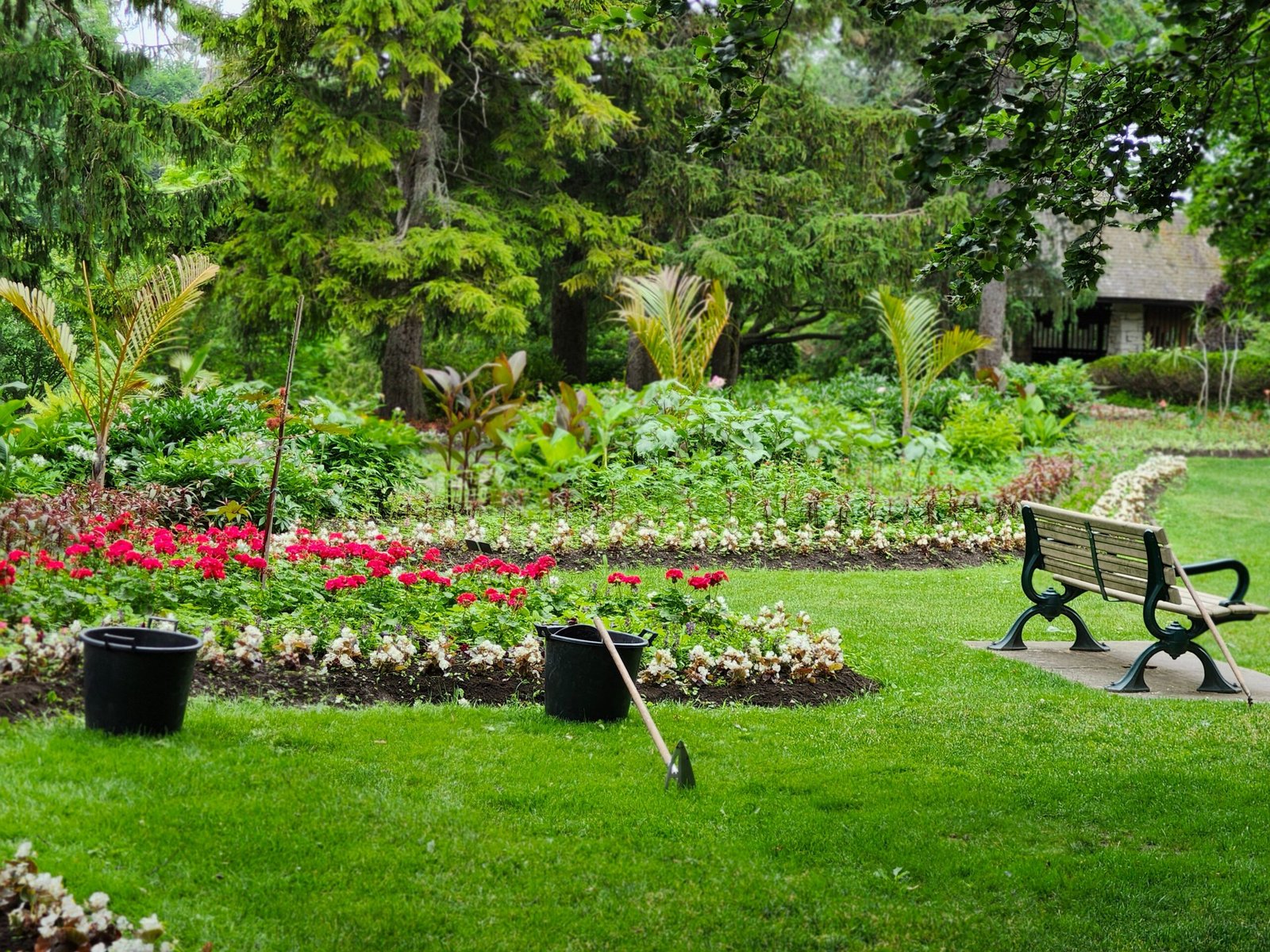
A beautiful garden does not have to demand hours of work every week. With thoughtful planning, suitable plants, efficient watering, practical materials, and a simple layout, you can create an outdoor space that looks attractive while being easier to care for.
The key is not to eliminate gardening altogether. Every garden needs some attention. Instead, the goal of a low-maintenance garden is to reduce unnecessary work and make routine care more manageable.
This approach can work for many types of outdoor spaces, including front gardens, backyards, patios, terraces, courtyards, small urban gardens, and larger residential landscapes. The right solution depends on your climate, soil, available sunlight, water supply, garden size, and how you intend to use the space.
Good garden design starts before you buy plants or materials. Understanding the site, deciding what you want from the garden, and preparing a basic plan can prevent expensive changes later. The Royal Horticultural Society recommends assessing the garden’s conditions and creating a plan before undertaking major changes, while University of Minnesota Extension similarly emphasizes site conditions, function, plant selection, installation, and maintenance as important parts of landscape planning.
Whether you are starting with a completely empty yard or improving an existing garden, the ideas below can help you create a space that is attractive, functional, and easier to maintain.
[Image Suggestion: A beautifully designed low-maintenance residential garden with simple planting beds, a paved pathway, comfortable seating, and clean landscaping lines]
What Is a Low-Maintenance Garden?
A low-maintenance garden is designed to require less routine work without sacrificing usability or visual appeal. It generally relies on sensible plant choices, efficient use of space, durable materials, simple planting schemes, and practical maintenance systems.
It does not mean a garden with no maintenance. Plants still grow, leaves still fall, irrigation systems may need checking, and outdoor surfaces occasionally need cleaning. The difference is that the design aims to prevent avoidable maintenance from becoming a constant chore.
For example, a complicated garden containing dozens of plant varieties, large areas of thirsty lawn, delicate plants, numerous containers, and intricate borders may require significantly more attention than a garden with a smaller selection of well-suited plants and clearly defined spaces.
A low-maintenance approach also does not necessarily mean a plain or boring garden. In fact, a restrained planting palette, strong structure, attractive paving, carefully positioned trees, and comfortable outdoor furniture can create a sophisticated result.
Why Plan Before You Start?
One of the easiest mistakes is buying plants and decorative items before deciding how the entire garden should work.
A plan allows you to consider the garden as a complete space. You can determine where people will walk, where they will sit, where plants will grow, how water will reach planting areas, and which existing features should remain.
The RHS notes that a scale plan can make it easier to create a design that works and can help with ordering the correct quantities of materials. It is also considerably easier to change a design on paper than to rebuild a completed terrace or pathway.
Start by observing your outdoor space rather than immediately changing it. Notice where sunlight falls during different parts of the day, which areas remain shaded, where water collects after rain, which areas dry quickly, and where wind is strongest.
Your garden’s soil and environmental conditions also matter. Different plants perform differently depending on soil, light, climate, drainage, available water, and exposure. Matching a plant to the conditions of the site can improve its performance and longevity.
The Main Principles of Low-Maintenance Garden Design
The most successful low-maintenance gardens are usually based on a few straightforward principles.
Keep the Layout Simple
A simple layout is easier to build, clean, maintain, and adapt.
Instead of creating many small planting beds separated by complicated curves, consider using a few larger, clearly defined areas. A simple rectangular lawn surrounded by planting beds can be easier to manage than a lawn broken into multiple irregular sections.
The same principle applies to paths and patios. A clear route from the house to the main seating area is usually more practical than a complicated network of paths that consumes valuable space.
Simplicity also creates visual clarity. Clean edges and repeated materials can make a garden feel intentional without requiring large amounts of decoration.
Choose Plants for the Site
Plant selection is one of the most important decisions you will make.
Do not choose plants solely because they look attractive in a photograph or garden centre. First consider whether they are suited to your local growing conditions.
Think about sunlight, soil type, drainage, climate, water availability, mature plant size, and the amount of care you are prepared to provide.
The RHS recommends choosing plants that suit your garden, while University of Minnesota Extension advises selecting trees and shrubs according to site conditions such as soil, light, climate, water, and exposure.
If you live in a hot or dry climate, your plant choices will be different from those suitable for a cool, wet region. Even within the same city, shade, soil, drainage, and exposure can create different growing conditions.
When in doubt, ask a reputable local nursery, horticultural professional, or regional extension service about plants that are proven to perform well in your specific conditions.
Reduce Unnecessary Lawn
Lawns can provide valuable open space, but large lawns may require regular mowing, watering, edging, and seasonal care.
If your household does not need a large lawn for recreation, consider reducing its size and using some of the area for planting beds, paving, ground cover, seating, or another practical feature.
This does not mean removing all grass. A modest lawn can still provide an attractive visual break between planting areas and create useful space for children, pets, or outdoor activities.
The important question is whether the amount of lawn matches how you actually use the garden.
Group Plants with Similar Needs
Another useful strategy is to group plants according to similar requirements.
For example, plants that need more frequent watering can be positioned together rather than scattered throughout the garden. Plants that prefer similar light conditions can also be grouped.
This makes watering and general care more straightforward because you do not have to treat every individual plant as a separate project.
It also creates stronger visual groupings. Repeating a few plant types across a border can provide rhythm and cohesion instead of making the garden look like a random collection of individual plants.
Practical Low-Maintenance Garden Ideas
1. Create a Strong Structural Framework
A garden can remain attractive even when individual flowers are not blooming if its basic structure is well designed.
Think about the permanent elements first: paths, walls, fences, raised beds, trees, hedges, pergolas, patios, and large planters.
Evergreen plants, where appropriate for the local climate, can also provide structure throughout the year. The RHS notes that structural elements such as hedges, sculptures, large pots, and topiary can form the “bones” of a garden and remain visually important outside peak growing periods.
A strong framework means the garden does not depend entirely on seasonal flowers for its appearance.
2. Use Repetition Instead of Too Many Plant Varieties
A common beginner mistake is trying to plant something different in every corner.
While variety can be attractive, excessive variety can make a garden look disconnected and increase maintenance.
Instead, choose a manageable group of plants and repeat them throughout the space. A repeated shrub, ornamental grass, flowering plant, or ground cover can visually connect different parts of the garden.
Repetition also supports rhythm, one of the recognized principles of garden design. The RHS identifies principles such as unity, balance, focal points, scale, proportion, movement, rhythm, texture, colour, and harmony as important considerations in garden design.
3. Add Mulch to Planting Beds
Mulch can be a practical addition around suitable plants.
An appropriate layer of organic or inorganic mulch can help reduce exposed soil and may contribute to moisture conservation and weed management, depending on the material and local conditions.
However, mulch should not simply be piled against tree trunks or plant stems. Use appropriate material and follow local horticultural guidance for application.
Mulching works particularly well when combined with a sensible planting layout rather than being treated as a substitute for good plant selection.
4. Install Efficient Watering
Watering can become one of the biggest maintenance tasks in a garden, particularly during hot or dry periods.
A well-planned irrigation system can make the process more manageable. Depending on the garden, options may include drip irrigation, soaker systems, targeted watering, or carefully positioned sprinklers.
The system should match the plants and layout rather than watering every area equally.
Grouping plants with similar water requirements can make irrigation more efficient. Always consider local water restrictions and climate conditions when deciding how to irrigate.
5. Choose Durable Hard Landscaping
Hard landscaping includes features such as paving, paths, walls, patios, edging, raised beds, pergolas, and other constructed elements.
Choosing durable, appropriate materials can reduce the need for frequent replacement or repair.
The right material depends on climate, exposure, drainage, intended use, budget, and local availability. A material that performs well in one region may not be the best choice somewhere else.
Keep the palette reasonably consistent. Using too many unrelated materials can make even a well-designed garden look visually busy.
[Image Suggestion: Simple garden pathway using durable paving surrounded by neatly planted borders]
6. Make Seating Part of the Design
A garden should be designed around how people use it, not only how it looks.
If you enjoy morning tea outdoors, create a comfortable seating point that receives suitable sunlight. If the garden is primarily used for entertaining, consider a patio or dining area close to the house.
Placing seating in the correct location also reduces the temptation to continually move furniture around.
For smaller gardens, multifunctional furniture can be especially useful. A bench with storage, a compact dining set, or movable seating can allow one area to perform several roles.
7. Use Containers Carefully
Containers are excellent for adding plants to patios, terraces, balconies, entrances, and areas where permanent planting is difficult.
However, too many containers can actually increase maintenance. Each pot may require individual watering, feeding, pruning, and occasional replacement.
Use containers selectively. A few large, attractive pots can have more visual impact than many small containers scattered throughout the garden.
Choose container size and plant type according to the growing conditions. Remember that plants in containers have a limited root environment and may require different care from plants growing directly in the ground.
Garden Layout and Space Planning
A practical low-maintenance garden usually has clearly defined zones.
A typical residential layout might include an entrance or pathway, a seating area, planting beds, a lawn or open space, and a private corner for relaxation.
The exact arrangement depends on the property.
Walking Paths
Paths should connect the places you actually use.
Think about the route from the back door to the seating area, garden shed, clothesline, garage, outdoor kitchen, or other frequently accessed location.
Avoid creating paths merely for decoration if they will not be used.
Seating Areas
Position seating where it is comfortable and useful. Consider sunlight, shade, privacy, views, wind, and proximity to the house.
A small garden may need only one carefully positioned seating area. A large garden can have several zones with different purposes.
Planting Beds
Instead of scattering plants throughout the entire garden, concentrate them into defined beds.
This makes mowing and cleaning easier and creates a clearer visual boundary between planting and open areas.
Raised beds can also help define spaces, although they introduce additional construction and maintenance considerations.
Focal Points
A focal point gives the eye somewhere to settle.
It might be a specimen tree, sculpture, attractive pot, water feature, pergola, seating area, or architectural view.
You do not need several dramatic focal points. One strong feature can be more effective than many competing objects.
Open Space
Do not feel pressured to fill every empty area.
Open space is useful. It provides visual breathing room, creates access, and can make a garden feel calmer.
A low-maintenance garden often benefits from deliberately leaving some areas uncluttered.
Choosing Plants for a Low-Maintenance Garden
Plant selection should always begin with your location.
Consider Sunlight
Observe how much direct sunlight different parts of the garden receive.
A plant that performs well in full sun may struggle in deep shade, while a shade-tolerant plant may not be ideal for a hot, exposed location.
The amount and timing of sunlight can also change during the year as the sun’s position changes and nearby trees grow.
Consider Soil and Drainage
Before selecting plants, determine whether your soil is heavy, sandy, free-draining, moisture-retentive, acidic, alkaline, or somewhere in between.
Also look for areas where water remains after rainfall.
Choosing plants suited to the existing conditions can be more sensible than trying to completely transform the soil throughout the garden.
Consider Mature Size
A small plant at a nursery can eventually become much larger.
Always check the expected mature size before planting trees, shrubs, or large ornamental plants near buildings, paths, boundaries, windows, or utility infrastructure.
Planting with mature size in mind can reduce future pruning and relocation.
Consider Maintenance Requirements
Ask yourself how much pruning, deadheading, watering, feeding, dividing, leaf clearing, and seasonal care a plant may require.
There is no universally “best” low-maintenance plant because suitability depends on location and growing conditions.
A plant that is easy to grow in one region may be poorly suited to another. Local plant advice is therefore especially valuable.
Ideas for Small Low-Maintenance Gardens
Small gardens can actually be easier to maintain because there is less area to manage, but limited space requires careful planning.
Use Vertical Space
Walls, fences, trellises, and vertical structures can provide planting opportunities without consuming much floor area.
Vertical gardening can also create privacy and add height.
Choose climbers and vertical plants according to your climate, wall conditions, available sunlight, and the amount of pruning they require.
Choose Multi-Purpose Furniture
A small seating area can double as a dining space.
A narrow bench can provide seating without consuming as much floor space as several chairs. Foldable or movable furniture can also be useful when the space needs to serve different purposes.
Use Large Containers Selectively
A small number of well-positioned containers can create a strong visual effect.
Avoid filling every available corner with pots. That may make the garden feel crowded and increase watering requirements.
Create Visual Depth
Using changes in height, a clear pathway, layered planting, and a restrained colour palette can help a small garden feel more spacious.
Contemporary garden design often uses clean lines, geometric layouts, carefully managed planting, and limited visual clutter, principles that can work particularly well in compact spaces.
[Image Suggestion: Compact low-maintenance courtyard garden with vertical planting, a built-in bench, large planters, and a simple paved floor]
Ideas for Large Low-Maintenance Gardens
Large gardens can be difficult to maintain if every section is treated as a separate decorative project.
Instead, divide the garden into clear functional zones.
You might have a lawn for recreation, a dining patio near the house, a planting area, a shaded relaxation space, and a simple pathway connecting them.
The goal is to make the large space feel intentional rather than empty.
Repeat materials, plant forms, colours, or structural elements throughout the garden so that the different zones still feel connected.
A large garden does not need to be filled with plants. Strategic planting combined with open space can create a much more manageable landscape.
Budget-Friendly Ways to Create a Low-Maintenance Garden
A low-maintenance garden does not have to be expensive.
One of the best ways to control costs is to improve the layout before purchasing large quantities of materials or plants.
Start with the elements that make the biggest practical difference. A defined pathway, a useful seating area, improved planting beds, and a sensible irrigation solution may be more valuable than numerous decorative accessories.
You can also reuse suitable existing materials. Old containers may become planters, existing stones may be incorporated into a pathway or border, and usable furniture can be cleaned or refinished instead of replaced.
DIY projects can also reduce labour costs, but they should be limited to work you can complete safely and correctly. Structural construction, electrical work, major drainage changes, or complex irrigation installations may require professional assistance depending on the project and local regulations.
Garden Lighting for Easier Evening Use
Good lighting can extend the usefulness of an outdoor space after sunset.
Pathway lighting can help people see where they are walking, while low-level accent lighting can highlight planting, trees, walls, or architectural features.
Seating areas may benefit from practical illumination that allows people to move and interact comfortably.
Solar lighting can be convenient in appropriate locations, but performance depends on the product, exposure, weather, and available sunlight. Do not assume that every solar light will provide the same level of illumination.
For mains-powered outdoor lighting, use appropriately rated equipment and have electrical installation carried out by a qualified professional where required.
[Image Suggestion: Low-maintenance garden illuminated at night with subtle pathway and seating-area lighting]
Seven Common Low-Maintenance Garden Mistakes
Mistake 1: Choosing Plants Only for Appearance
Why it happens: A plant looks beautiful at the nursery or in an online photograph.
Better approach: Check its mature size and requirements for sunlight, soil, water, climate, and maintenance before purchasing it.
Mistake 2: Making the Garden Too Complicated
Why it happens: Homeowners try to include every idea they have seen.
Better approach: Choose a clear layout and a limited number of complementary materials and plant types.
Mistake 3: Installing Too Much Lawn
Why it happens: A lawn seems like an easy way to fill an empty yard.
Better approach: Keep lawn where it serves a purpose and consider planting or hard landscaping for areas that do not need grass.
Mistake 4: Ignoring Mature Plant Size
Why it happens: Small nursery plants make it difficult to imagine their eventual size.
Better approach: Research mature dimensions before planting, particularly near buildings, paths, fences, and windows.
Mistake 5: Adding Too Many Containers
Why it happens: Pots provide an easy way to add instant greenery.
Better approach: Use containers as deliberate focal points rather than filling the entire garden with them.
Mistake 6: Treating Watering as an Afterthought
Why it happens: Irrigation is considered only after planting is complete.
Better approach: Think about how every planting area will receive water before installing plants.
Mistake 7: Filling Every Empty Space
Why it happens: Empty areas can feel unfinished during the design process.
Better approach: Keep some open space. It can improve visual balance and reduce maintenance at the same time.
Adapting the Idea to Different Garden Styles
A low-maintenance approach can work with many design styles.
Modern Garden
Use clean lines, simple paving, restrained planting, and carefully selected architectural features. Contemporary gardens often emphasize geometric layouts and uncluttered spaces.
Minimalist Garden
Keep the material and plant palette particularly restrained. A few strong elements can provide more impact than numerous decorations.
Traditional Garden
Use structured planting beds, familiar materials, and carefully positioned shrubs or trees while keeping the layout practical.
Cottage-Inspired Garden
A cottage style can still be made more manageable by concentrating abundant planting into defined areas and repeating selected plants rather than filling every available space.
Contemporary Outdoor Space
Combine comfortable furniture, durable surfaces, structured planting, lighting, and a clear relationship between the house and garden.
The RHS notes that different garden styles can be created through combinations of layout, planting, materials, and how plants are used within the overall design.
How to Create a Low-Maintenance Garden Step by Step
Step 1: Measure and Observe the Space
Record the garden’s approximate dimensions and existing features. Observe sunlight, shade, drainage, wind, access points, and views.
Step 2: Decide How You Will Use the Garden
Determine whether the priority is relaxing, entertaining, gardening, children’s play, pets, dining, privacy, or simply having an attractive outdoor view.
Step 3: Draw a Basic Layout
Mark the house, entrances, existing trees, boundaries, structures, utilities, lawn, proposed paths, planting areas, and seating.
A scaled drawing can make the planning process more accurate and can help avoid costly mistakes.
Step 4: Simplify the Design
Remove features that add complexity without providing meaningful value.
Ask whether each path, planting bed, container, lawn area, or decorative feature has a clear purpose.
Step 5: Select Suitable Plants
Choose plants based on local conditions rather than appearance alone. Consider sunlight, soil, drainage, climate, water requirements, mature size, and maintenance.
Step 6: Plan Watering
Decide how planting beds and containers will be watered. Group plants with similar needs where practical.
Step 7: Install Hard Landscaping
Complete major paths, patios, edging, structures, and other permanent features before final planting.
Step 8: Add Plants in Layers
Use an appropriate combination of larger structural plants, shrubs, ground-level planting, and seasonal interest according to the space and local growing conditions.
Step 9: Add Furniture and Lighting
Position seating where it will actually be used and introduce practical lighting for pathways, entrances, and outdoor living areas.
Step 10: Maintain the Garden Intelligently
Low maintenance still means maintenance. Establish a realistic routine for watering, pruning, mowing, cleaning, checking irrigation, removing unwanted growth, and monitoring plant health.
The objective is to create a garden where routine care is predictable rather than overwhelming.
Advantages and Disadvantages of a Low-Maintenance Garden
Advantages
A thoughtfully designed low-maintenance garden can reduce routine workload, make outdoor spaces easier to use, and simplify watering, mowing, pruning, and general care.
It can also make a garden more practical for homeowners who enjoy outdoor spaces but do not want gardening to become a full-time responsibility.
A simpler landscape can have another advantage: its design may be easier to understand. Clearly defined spaces, repeated materials, and a controlled planting palette can create a cohesive appearance.
Disadvantages
Low-maintenance design still requires planning and some ongoing care.
The initial installation may also involve more thought and potentially higher upfront spending if you invest in durable materials, irrigation, professional design, or mature plants.
There is also no universal formula. A design that works beautifully in one climate may perform poorly somewhere else.
This is why site assessment remains essential. The RHS and University of Minnesota Extension both emphasize understanding the specific garden conditions before selecting plants and developing a landscape.
Frequently Asked Questions
How do I make my garden low maintenance?
Start by simplifying the layout, choosing plants suited to your local conditions, reducing unnecessary lawn, grouping plants with similar requirements, planning efficient watering, and selecting durable landscaping materials.
What are the best plants for a low-maintenance garden?
There is no single list of plants that works everywhere. The best choices depend on your climate, soil, sunlight, drainage, water availability, and available space. Local horticultural advice is usually the safest way to identify suitable plants.
Is a low-maintenance garden completely maintenance-free?
No. Every living garden requires some care. Low-maintenance design aims to reduce unnecessary work rather than eliminate maintenance completely.
How can I reduce lawn maintenance?
Consider whether every part of the lawn is necessary. You can reduce lawn area and replace some sections with suitable planting beds, paths, patios, ground cover, or other functional spaces.
How can I design a low-maintenance small garden?
Use a simple layout, multifunctional furniture, vertical planting where appropriate, a limited plant palette, and clearly defined planting areas. Avoid filling the garden with too many small containers or decorative objects.
How do I choose plants for my garden?
Begin by assessing sunlight, soil, drainage, climate, water availability, wind exposure, and available space. Then select plants whose requirements match those conditions.
Should I use mulch in a low-maintenance garden?
Mulch can be useful in suitable planting areas, but the correct material and application depend on the garden and plants. It should be used as part of an overall maintenance strategy rather than as a replacement for appropriate plant selection.
Is drip irrigation good for a low-maintenance garden?
Targeted irrigation can make watering easier and may be useful for certain planting arrangements. Its suitability depends on the plants, layout, water source, climate, and system design.
How many different plants should I use?
There is no fixed number. However, using a manageable selection and repeating plants throughout the garden can create visual unity and simplify maintenance.
Can a traditional garden be low maintenance?
Yes. A traditional garden can use simple planting beds, suitable shrubs, practical paths, and a controlled plant palette while retaining a more classic appearance.
Can a modern garden be low maintenance?
Yes. Modern gardens often lend themselves to simple geometry, defined spaces, durable surfaces, and restrained planting, although every design still requires appropriate plant care.
How can I make a large garden easier to maintain?
Divide it into functional zones rather than treating the entire property as one large planting area. Use lawn selectively, concentrate planting, create clear paths, and repeat materials and plants throughout the landscape.
How can I design a low-maintenance garden on a budget?
Start with planning rather than purchasing. Improve the layout first, reuse suitable existing materials, prioritize high-impact features, choose plants carefully, and complete projects in stages.
Should I hire a professional garden designer?
A professional can be helpful for complex sites, major landscaping projects, difficult drainage issues, structural work, or homeowners who want a detailed design. For a simple garden, careful observation, planning, and local horticultural advice may be enough.
Final Thoughts
A low-maintenance garden is not about removing everything that makes a garden enjoyable. It is about making better decisions before the work begins.
Start by understanding your outdoor space. Observe sunlight, soil, drainage, water availability, wind, existing plants, and how you actually use the garden. Then create a simple layout that gives every major element a purpose.
Choose plants because they are suitable for your conditions, not simply because they look attractive in a photograph. Reduce unnecessary lawn, group plants according to their needs, plan irrigation early, and use durable materials where appropriate.
Most importantly, resist the urge to fill every corner.
A garden can be beautiful because of its plants, but it can also be beautiful because of its proportions, pathways, open spaces, textures, lighting, furniture, and relationship with the home. Good design brings these elements together into one coherent space.
With thoughtful planning, even a modest backyard, terrace, courtyard, or large lawn can become a comfortable outdoor environment that looks inviting without demanding constant attention.